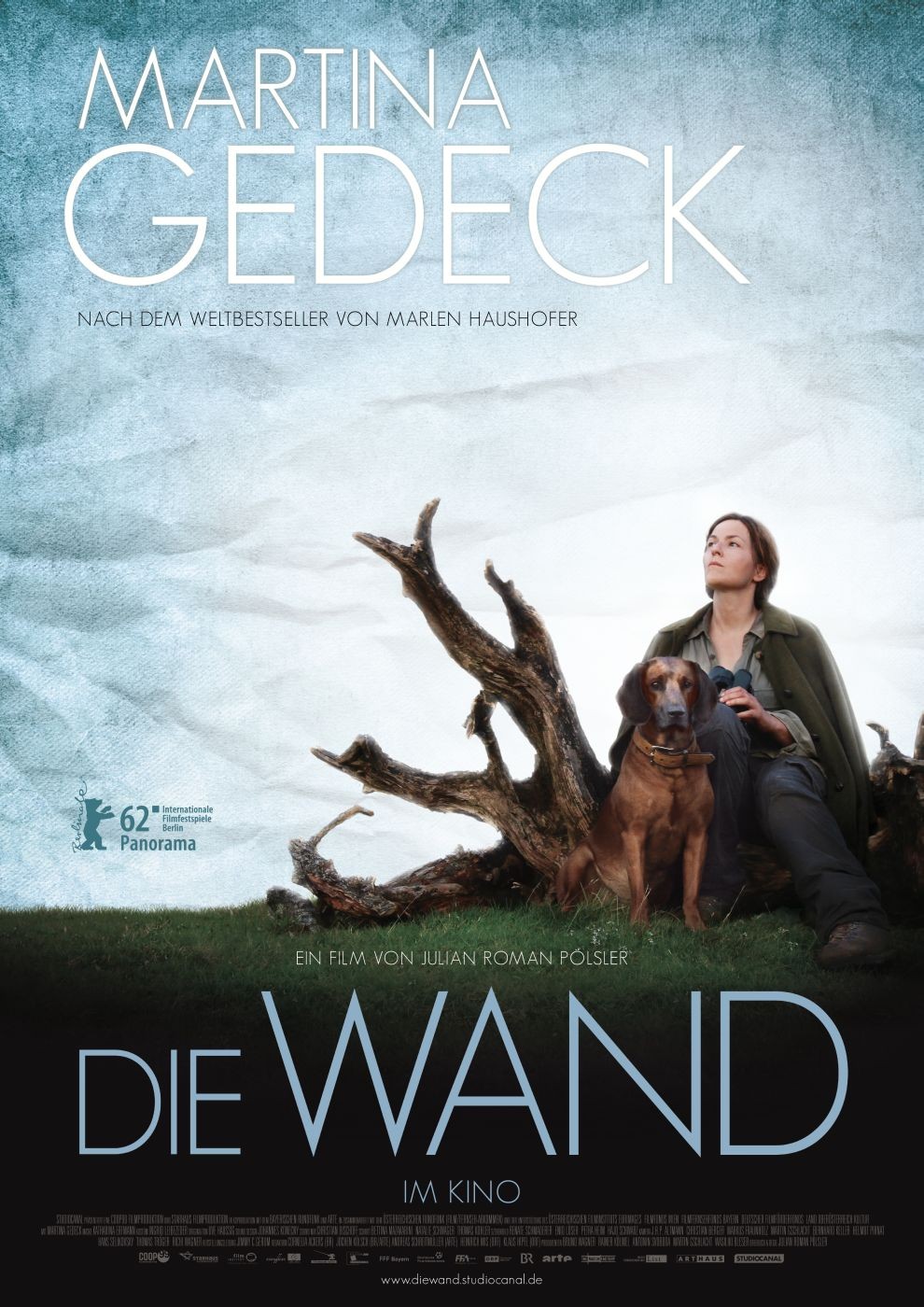
This is the synopsis from Netflix: "Vacationing with a couple in their mountain retreat, a woman finds herself alone at the cabin one afternoon, inexplicably trapped by an invisible wall. Her isolation behind the barrier grows more surreal as hours, then days, then weeks pass." Sounds like a cool premise, right? I mean, how is she going to get out? I mean, she's going to spend most of the movie figuring out the nature of this wall and then trying to escape it, right? When she first encounters the wall, she's on a path. Next to the path is a river, where water is clearly flowing through the wall – wouldn't you, I don't know, try to swim in the water to see if you could get under the wall? Throw rocks at it to try to see how high it goes (it does seem like birds are able to cross in and out of the wall and rain, snow and wind still exist, so it's not like a dome). If you happen to see someone two years after this journey, wouldn't you maybe try to talk to him to see where he came from (even if he just killed your dog) instead of just murdering him? You and I probably would because we are not vehicles for philosophy. "The woman," however, exists solely as a vehicle for philosophy, so nothing she does makes any sense. She's too busy contemplating her aloneness than to try to do anything about it. So we, the viewers of this beautifully shot movie (it really is gorgeous!), must suffer through her loneliness with her rather than see her try to do ANYTHING about it. She never digs a hole on the border of the wall to see how deep it goes. Instead she spends 10 days waiting to be rescued and then just accepts her fate. And that happens about 10-15 minutes into the movie, so get ready to philosophize!
Tampilkan lebih banyak