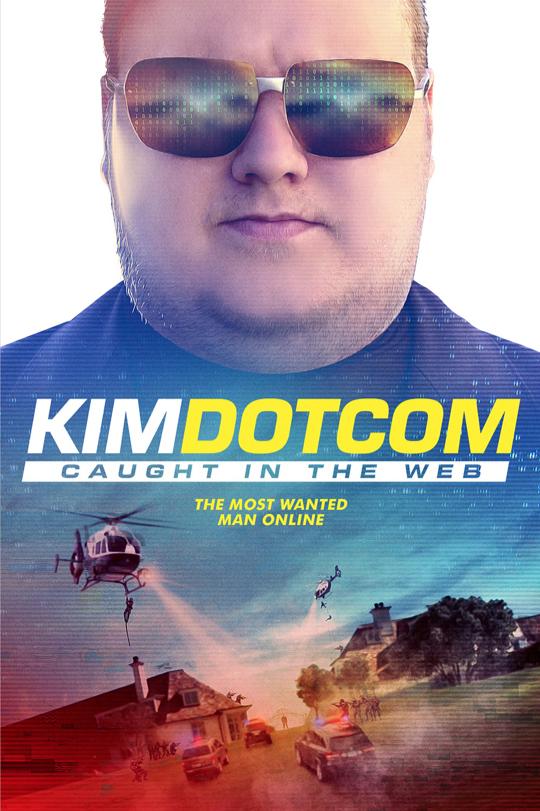
This documentary explores three interconnected themes: the enigmatic figure of Kim Dotcom, the influence of copyright and media lobby in the U. S., and the shortcomings of the political and justice systems in New Zealand.
Kim Dotcom is portrayed as a deeply troubled individual with profound psychological issues. His behavior suggests a self-centered egomania and a pronounced narcissistic personality. Additionally, he exhibits a criminal mindset, believing himself to be above the law and comfortable with lying and deception.
Despite his troublesome past, the German justice system has been lenient with Dotcom, sparing him severe punishment. This leniency, coupled with his distorted perception of his own superiority and divinity (reflected in his choice of vanity license plates reading 'GOD,' 'KILLER,' and 'CEO'), has contributed to his lack of a moral compass.
The documentary also delves into the flaws of the copyright system and the influential media lobby in the United States, providing ample material for critique and analysis.
Dotcom's life takes a dramatic turn when the U. S. government, operating in New Zealand, finally cracks down on him. This serves as a defining moment for him, although he masterfully manipulates public perception through various PR campaigns. He endeavors to convince people, the media, and politicians that his actions were not about himself but rather a sacrifice in the fight against the media lobby. Exploiting trending topics such as privacy, security, and internet freedom, Dotcom tries to divert attention from his own illegal activities.
However, the documentary becomes confusing at times. It skillfully portrays Dotcom as a fascinating yet disturbed character, satisfying our voyeuristic desire to witness psychological turmoil, akin to our fascination with TV shows about hoarders or failed criminals. Paradoxically, the filmmakers seem to unintentionally align themselves with Dotcom's perspective, as if they were swayed by his manipulative influence during production. It feels as though they started off documenting a cult only to become part of it themselves, convinced of the false deity the cult worships. This reminds me of an old Belgian movie in which a documentary team follows a heinous killer, eventually becoming complicit in his crimes (C'est arrivé près de chez vous).
The documentary also sheds light on the manipulability, weakness, and incompetence of the New Zealand political, justice, and police systems. New Zealand is depicted as a vulnerable country that can be "hacked" and exploited by a hacker like Kim Dotcom. This portrayal offers a new perspective on New Zealand, presenting it as a small, easily influenced nation with a handful of key figures who can be easily manipulated. It implies that anyone with a fabricated idealism could invade the country at any time. While it remains uncertain if this portrayal is accurate, it is presented in a manner that suggests vulnerability.
Rather than delving deeper into the potential flaws within this apparently volatile system, the filmmakers unexpectedly shift focus and assert that Dotcom's success stems not from the weaknesses of the New Zealand system, but from his own righteousness and idealism.
In the end, I was left perplexed by the filmmakers' failure to see beyond the façade, even when the truth was evident throughout their own documentary. They became entangled with their subject, displaying clear bias.
It almost seemed as though the filmmakers consciously chose this path to appeal to the proponents of a free internet, copyright-free ideals, and liberal movements, solely to garner more attention for their documentary within this specific target audience-a strategy reminiscent of Dotcom himself.