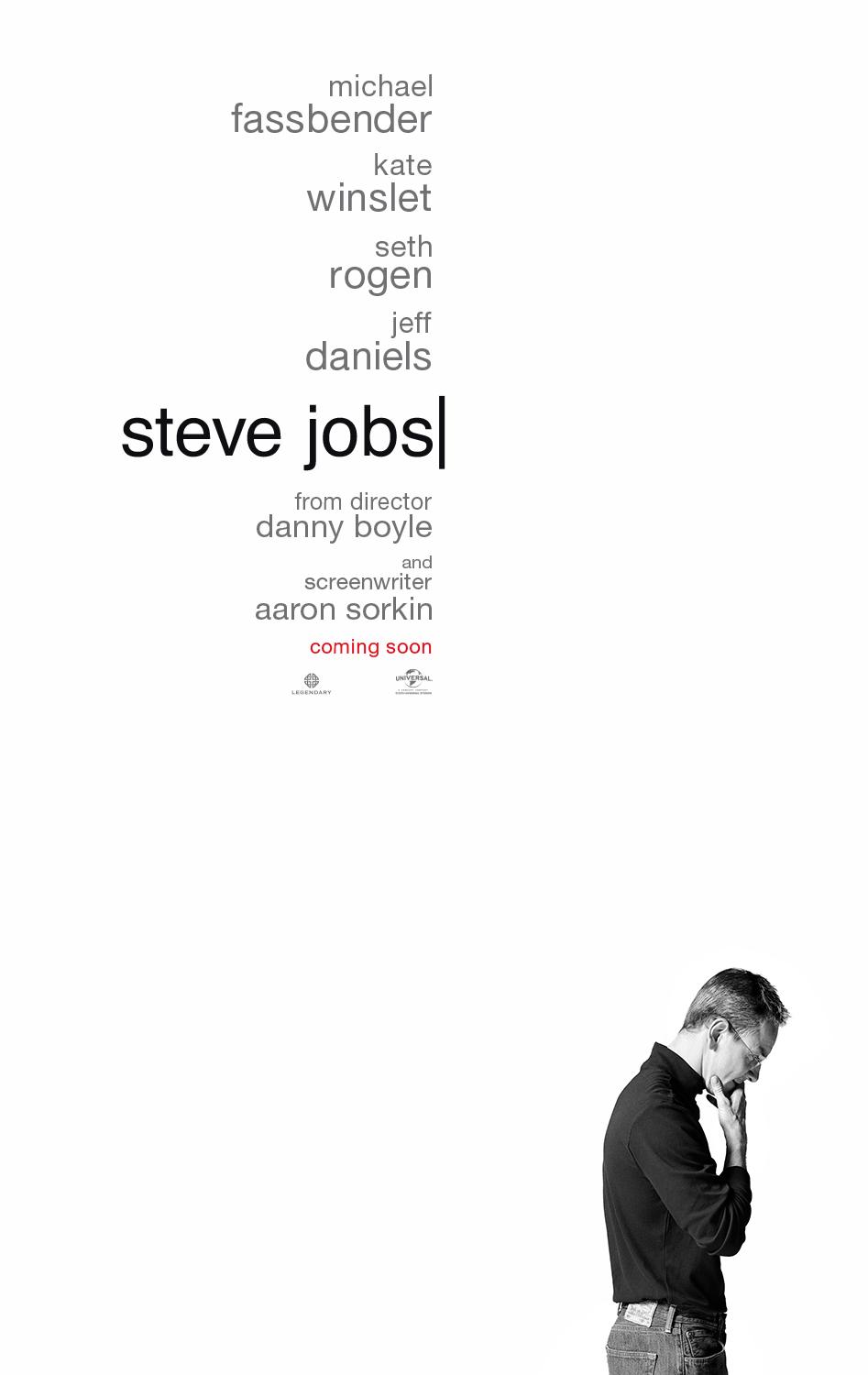
This film is nothing about Steve Jobs, Chairman of Appple Computer, as 99% of the public knew him. Imagine casting Pee-Wee Herman as Don Vito Corleone in The Godfather and you can get a sense of how badly cast Michael Fassbender was as Steve Jobs. Imagine showing just a glimpse of the newest Apple products on a stage in a packed auditorium of enthralled spectators without telling how Steve and Apple created them. Omitted is Steve Jobs' uncanny ability to create, drive for perfection, and his effective "reality distortion field" management methods (borrowed Star Trek). Imagine focusing a film about this brilliant and highly admired inventor on his rationale for refusing child support, when he's a millionaire, to his first wife instead of on the unique story of his extreme passion for building revolutionary products and his influential and antagonistic management tactics pushing his staff to achieve beyond their own expectations for greatness. Who cares about his personal life? How did he invent such great products? How did he motivate his employees and negotiate with companies to revolutionize multiple industries? How was he so innovative when other companies simply copied each other? How was the new Macintosh so ground-breaking for 1984 that no one knew how to write software for it? The subsequent low sales from lack of Mac applications and Steve's rebellious personality led to infighting at Apple and Jobs' firing. How was this so integral to Steve's success? These are questions I've asked myself since 1980 when I first learned of Apple Computer.
Danny Boyle could not have done a worse job if he had planned to, which does not do Steve Jobs nor Apple justice. Steve Jobs revolutionized the personal computer industry with the Apple II in 1977 and Macintosh in 1984, the music industry with iTunes and iPod in 2001, the telecommunications industry with the iPhone in 2007, the mobile computing and book industries with the iPad in 2010. Steve invented the desktop publishing industry with the Macintosh computer and new Laserwriter printer in 1985. He transformed the animated film industry with Pixar in 1995, when Toy Story was released. He married art and technology in ways no other person or company in history has done. He made technology accessible to everyday consumers through state-of-the-art electronics, remarkable forethought of market potential and simplicity of design. He brought Apple Computer, the company he founded and was famously fired from, back from the brink of bankruptcy to be the world leader in consumer electronics and one of the largest companies in the world. Apple's innovation was many years ahead of the leaders of the industries it expanded into. Through imagination and sheer will Steve influenced the entire telephone industry to change, the animated film industry to change, and the publishing of books to change. No one has had a more diverse impact on so many industries since Thomas Edison, who to this day still holds the record for most individual patents for inventions.
But Danny Boyle and Aaron Sorkin chose to ignore this since they believe the public is more interested in the soap opera drama of Steve Jobs private family life. Sorkin obviously fails to comprehend Walter Isaacson's biography on Steve Jobs. He obviously never saw one videotaped interview with him and he certainly never read a single magazine article about him. What terrible film preparation for a biography on such a remarkable inventor.
عرض المزيد