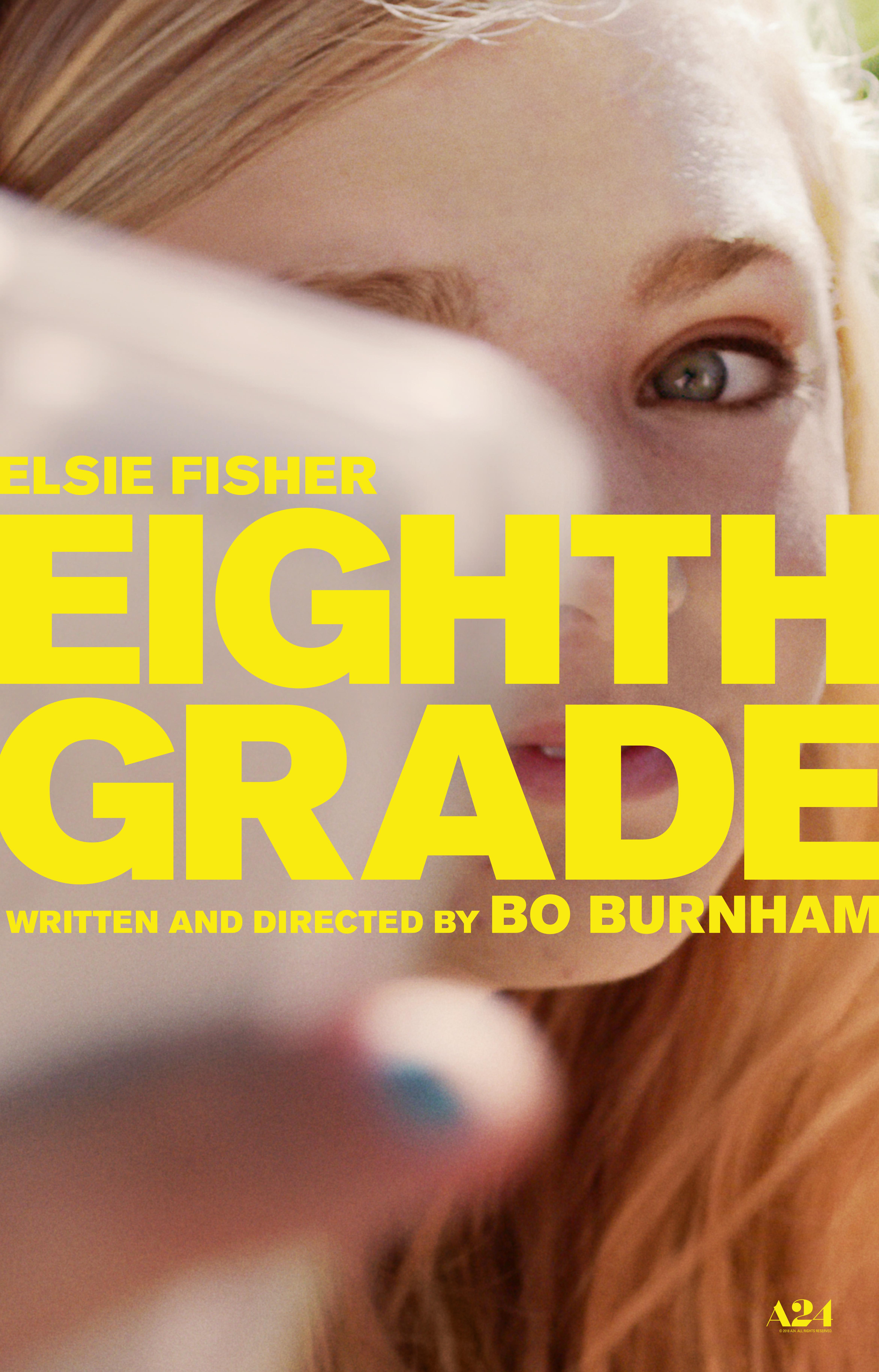
'Eighth Grade' is a movie you'll be talking about for a long time. Bo Burnham, one of the O.G.'s of teen YouTube stardom, has given us an agonizingly rich and authentic look at what life is like for Kayla (Elsie Fisher), a shy 13-year-old girl in today's social media obsessed world. Burnham, directing his first feature, doesn't spare any detail and doesn't alter any truth.
This film is exceedingly honest. It doesn't depict Kayla's experiences the way we might think they should be for an eighth grader or the way we might want them to be-they're simply presented as they are. Pool parties are a source of unbearable discomfort. First sexual encounters are not always pleasant. Kids with exploding hormones and little impulse control randomly shout unfunny phrases at assemblies in the hopes of earning a laugh.
The storytelling has the feel of a nature documentary. We can almost hear the narrator describing Kayla's attempts to navigate her fascinating and frightening terrain. Playing the vulnerable character who's far from the top of the food chain, she's just trying to survive.
Kayla, like so many kids her age, is a shy girl pretending to be confident. She posts advice videos to YouTube on how to be yourself, something with which she still very much struggles. As she records one video, she slowly rolls her chair farther away from the camera, indicating a declining level of self-assurance. This mirrors her real-world peer interactions, in which she stammers and laughs halfway through sentences as she begins to doubt herself and shrink with embarrassment, not that the self-absorbed "listener" bothers to notice.
All the kids stare at their phones constantly. These modern mean girls barely bother to muster up the energy put others down with a passive-aggressive remark because that would involve speaking to another person. Instead, they inflict harm by neglecting to acknowledge an uncool kid's mere existence.
As cruel as that sounds, these popular kids aren't presented as villains. This is simply their way of handling their own insecurities. There are no villains in eighth grade-they're all just kids trying to figure out their lives and trying to figure out themselves.
And the adults don't know how to handle any of this. Kayla's dad wants to connect with her, but is met with constant rejection. He smartly gives her space and only requests her attention to remind her how much he loves her. In one scene, Kayla asks if she makes him sad, and he fervently reassures her that she makes him profoundly happy. Like Kayla, he can't always find the right words, but he successfully expresses the feeling.
That scene is a microcosm of the entire film. Its dialogue isn't readily quotable or particularly memorable, and that's okay. What is actually said isn't as important as the meaning behind it.
Parents can keep this in mind when they have conversations with their own kids, possibly directly after watching this film. Many kids and parents will likely watch it together since it carries an "R" rating (it's ironic that a film that accurately reflects the lives of eighth graders is deemed too adult for them to watch on their own). And parents should watch this with their kids, so they can both understand each other a little bit better. They'll both be better for doing so.